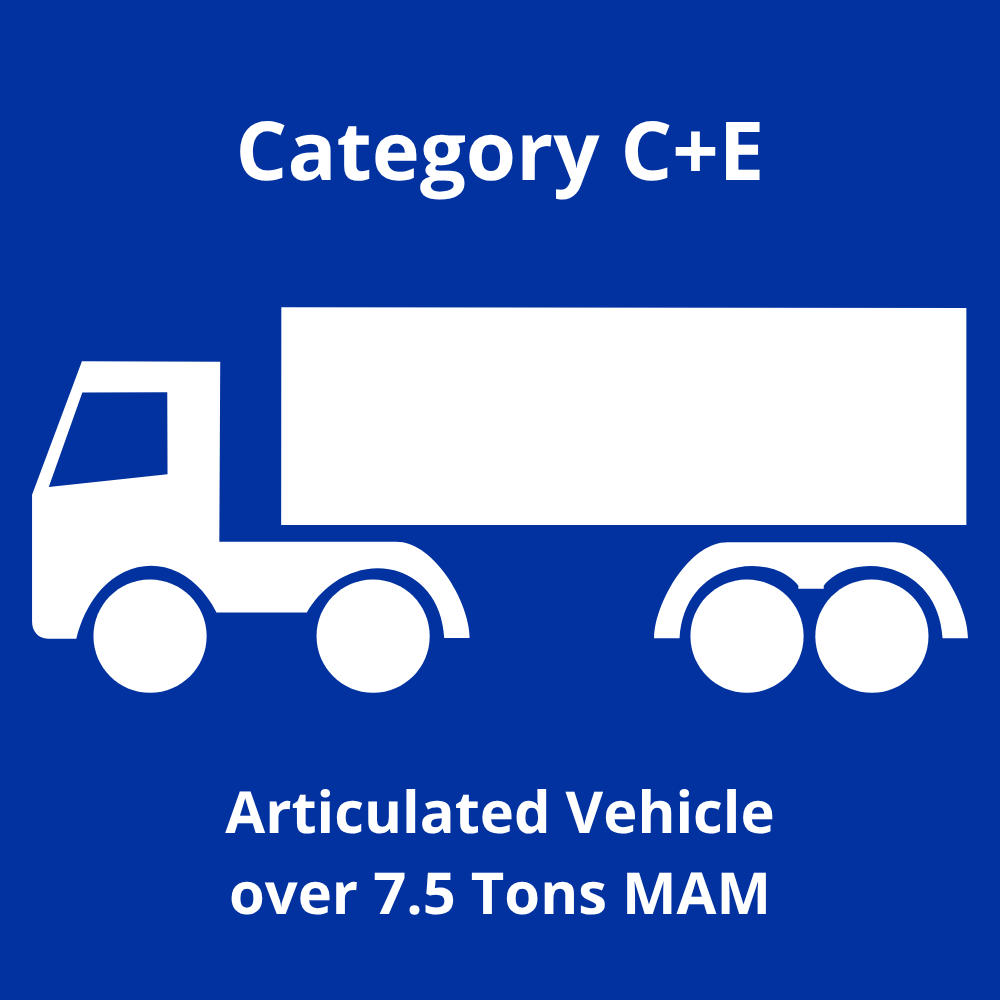
Category C+E: Drive Articulated Lorries (Artics)
A Category C+E licence is the pinnacle of HGV driving qualifications, empowering you to drive articulated lorries – those large vehicles comprising a cab and a detachable trailer. Holding this licence opens doors to the highest-paying and most in-demand driving roles in the transport sector.
Typical Roles You Can Pursue with a Cat C+E Licence:
- Long-Haul HGV Driver: Transport goods across the UK or even internationally, connecting major hubs and delivering essential supplies.
- Supermarket and Retail Distribution: Become a vital link in the supply chain, ensuring shelves are stocked nationwide.
- Logistics and Freight Haulage: Work for dedicated transport companies, moving a vast array of goods for various industries.
- Container Transport: Specialise in moving shipping containers to and from ports and rail terminals, playing a crucial role in global trade.
- Tanker Driver: Transport liquids such as fuel or chemicals (often requiring additional ADR certification for hazardous materials).
- Refrigerated Transport: Deliver temperature-sensitive goods like food and pharmaceuticals, maintaining precise conditions.
What Will Your Day Look Like?
As a Category C+E driver, your responsibilities will extend beyond simply driving:
- Operate large articulated lorries over varying distances, from short local runs to extensive national or international journeys.
- Master the critical skills of hitching and unhitching trailers safely and efficiently.
- Conduct thorough daily safety checks on your vehicle and trailer, and accurately use tachographs to record driving and rest times.
- Strategically plan routes and adhere to strict delivery schedules to ensure timely arrivals.
- Engage in loading and unloading operations, sometimes utilizing equipment like forklifts or cranes.
- Strictly comply with all legal driving hours and rest regulations to ensure safety and legality.
Considerations for CAT C+E Drivers:
- Long Hours & Time Away: Jobs, especially international ones, can involve long working hours and extended periods away from home.
- Mentally Demanding: Strict schedules, traffic challenges, and isolated driving can be mentally draining.
- Specialized Training Required: Certain loads (like tankers or hazardous materials) require extra training and an intense focus on safety.
- Physical Strain: The nature of the work, including trailer coupling/uncoupling, loading, and prolonged driving, can lead to physical strain.
The Benefits of a CAT C+E License:
- Highest Earning Potential: Cat C+E is generally the highest paying licence category within the transport industry.
- Huge Demand: There is a significant and ongoing demand for Cat C+E drivers across the UK and Europe, offering excellent job security.
- Variety of Work: Choose from a diverse range of opportunities, including local, national, or international routes.
- Career Stability: As an essential industry, transport offers robust career stability regardless of economic fluctuations.
- Independence: Much of the work involves solo driving, appealing to those who value autonomy.
- Self-Employed Potential: Opportunities for self-employed or contract work are common, offering greater flexibility.
Salary Expectations (UK Estimate – 2025):
The earning potential for a Cat C+E driver is highly competitive:
- Starting Salary: £38,000 – £45,000
- Experienced Driver Salary: £45,000 – £55,000+
- Specialized Drivers (e.g., Tanker or ADR-certified): £55,000 – £65,000+
- Earnings can be further boosted by taking international routes or night shifts.
-
The Cat C+E Licence Process: A Step-by-Step Guide
Here’s what you need to know to get your Cat C+E licence:
1. Provisional Cat C+E Licence: Your First Step
Before you can get behind the wheel for training or take your assessment, you’ll need a provisional LGV licence.
- Medical Examination Required: To obtain your provisional licence, you must undergo a medical examination to ensure you meet the required health standards.
- Need Assistance? If you need any help understanding the forms or the application process, our friendly team is here to guide you. Just let us know!
2. Medical Examination: Getting Started
You’ll need a specific medical examination form as part of your provisional licence application.
- Where to Get the Form: You can pick up a form at our office, at a large post office, or download it online.
- Booking Your Medical:
- Full Package Option: We can conveniently book your medical appointment for you as part of our full training package.
- Contact Your GP: Alternatively, you can schedule your medical examination directly with your own General Practitioner (GP).
3. Initial Assessment: Understanding Your Needs
This assessment is highly recommended, especially if you’re unsure about the specific type of lorry you want to drive or if you’d like a personalized recommendation for your training hours.
- Benefits: Helps determine the most suitable training path for you.
- Fee: Contact us for a quote.
4. Theory Test (Module 1): Knowledge is Key
You must successfully pass the Module 1 theory test before we can book your practical driving test.
- Preparation Options:
- One-Day Course: We offer an intensive one-day course to help you prepare effectively. Please contact us for details.
- Online Study: We can also provide access to relevant online study materials to suit your learning style.
- Fee: Payable directly to the DVSA – Driver and Vehicle Standards Agency.
5. Case Studies (Module 2): Applying Your Knowledge
This module assesses your understanding of real-life scenarios and is a prerequisite for the practical CPC test in most cases.
- Important Note: In some specific situations, this module might not be required for your LGV licence. Please call us to clarify your individual requirements.
- Preparation: We offer suitable online study resources to help you prepare for this module.
- Fee: Contact us for a quote.
6. Practical Driving Tests (Module 3): Putting Skills into Practice
We aim to make your practical test experience as smooth as possible.
- Convenient Scheduling: We typically arrange your practical test for the final day of your training.
- Familiar Vehicle: You’ll take your test in the same vehicle you’ve been training in, ensuring familiarity and comfort.
- Fee: Contact us for a quote.
7. Driver CPC Practical Test (Module 4): Demonstrating Professional Competence
This is a practical test focused on the operational aspects of a commercial vehicle, not the driving itself.
- Important Note: Depending on your specific licence category and intended use, you might not need to take this test. Please contact us for personalized advice.
- Fee: Contact us for a quote.